icebox or fridge in 2021 T@G

offgrid2
Member Posts: 9
My Boondock came with a yeti icebox. We find it heavy and inconvenient to pull it out to retrieve anything. I looked at a sliding base but it is hard to fit. This was our first time using a modern cooler and, frankly, it is a waste of space since it has to be filled with so much ice.
We have an older Engel 45 that works extremely well but does not fit into the galley so has to go in the car(subaru outback). I can plug it in there so it will charge while driving so the pproblem is using it at camp. I have the usual nuCamp setup of a 100w solar panel and 100Ahr battery but am unsure if that will handle it as well as the rest of the DC loads. My options appear to be: 1, to build a separate vehicle system of battery, controller/charger and pv pane, 2,add an additional 100w pv panel plus an additional battery or, 3, go for a Bouge fridge that will fit the yeti opening on a slide and add the second battery plus pv panel.
I would appreciate any and all comments, guidance and recommendations, thanks, Simon
Comments
-
@offgrid2
Why NuCamp changed from a DC refrigerator to a Yeti icebox is hard for me to comprehend.
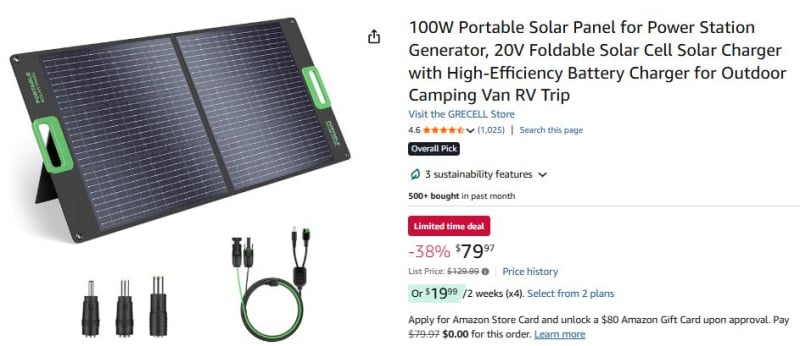
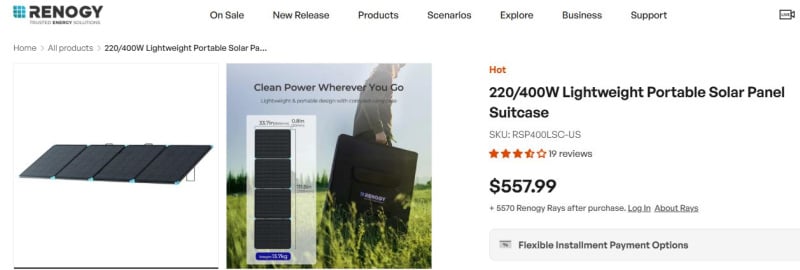
I have had no problems with my Norcold NRF 30. With my 100Ah lithium battery, I can make it 3-4 days even without solar. With a 100-watt solar suitcase by Renogy and full sun, I can last 10+ days. I do usually pack an ice chest with items to drink, and it can keep things cold for 4 days without ice replenishment. After that period, I start moving drink items to the Norcold on an as needed basis. I have always wanted to set one refrigerator up as a freezer and bring ice cream with me to the desert. Having ice for drinks past day 5 would be great.
I now have multiple solar suitcases and other solar panels (100+100+220+120-watts) and solar extension wire to provide for indefinite camping if needed.
I also have a backup BougeRV refrigerator (CR28) that I could also utilize as desired.
Knowing your current setup and options, I can suggest some options.
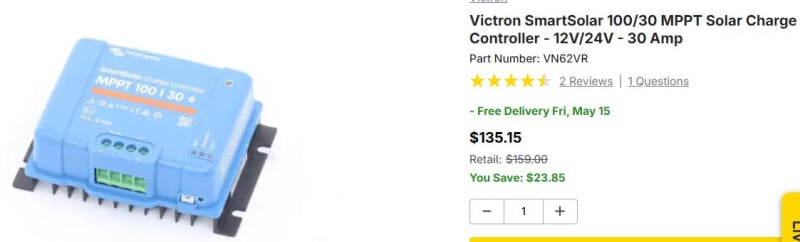
From a solar setup, I believe you may be somewhat limited by the Victron Smart Solar controller (MPPT 75/10). The amp rating of your current controller (10Amp) would not be adequate for another 100-watt solar panel.
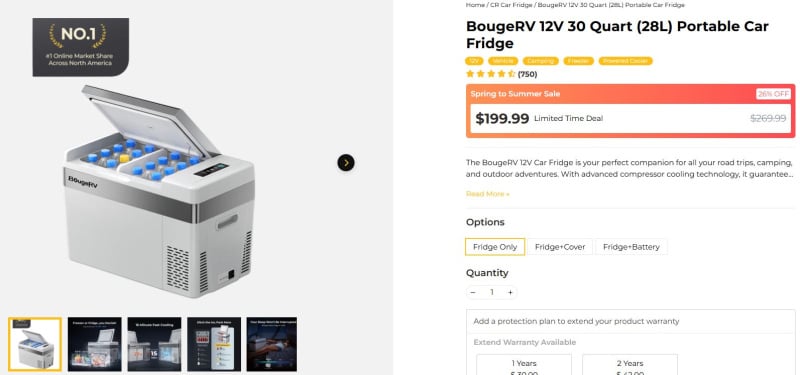
My goal would be to get a refrigerator installed in the T@G. You mentioned BougeRV. I have had no problems with my BougeRV CR28 (30 Qt) and my testing has shown it to be a capable and efficient refrigerator.
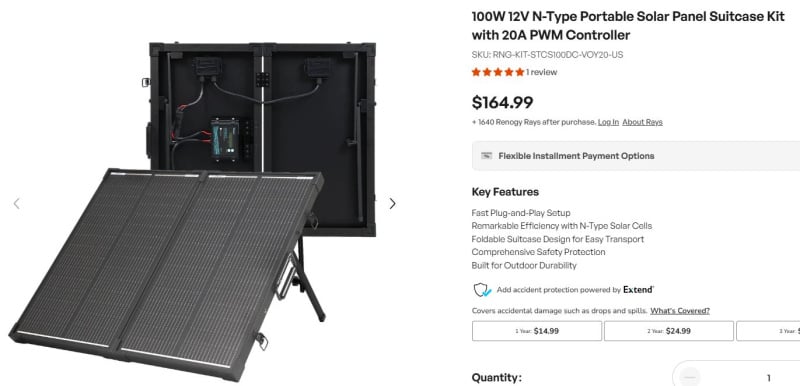
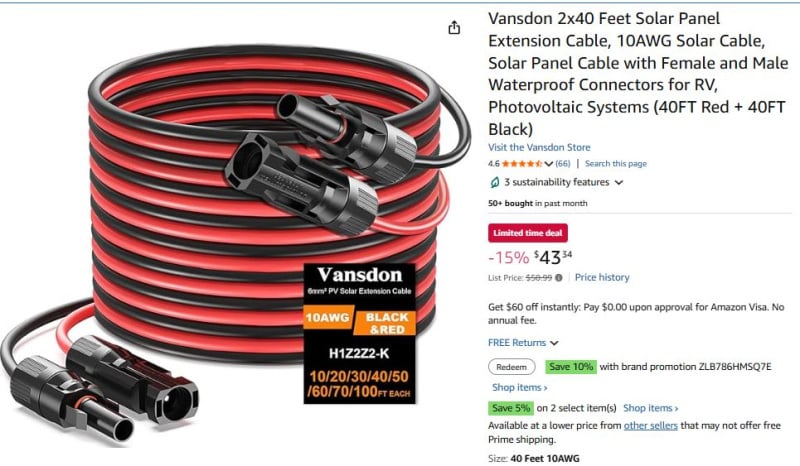
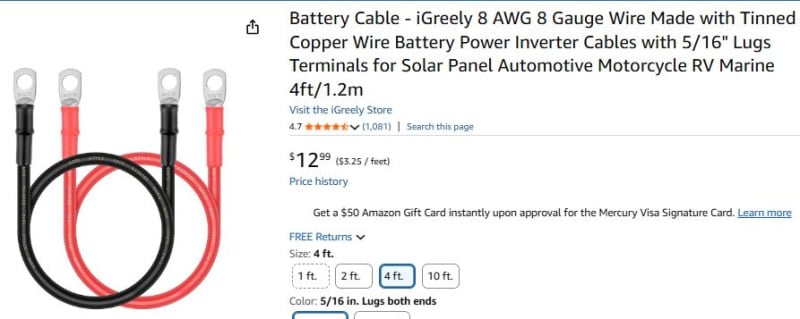
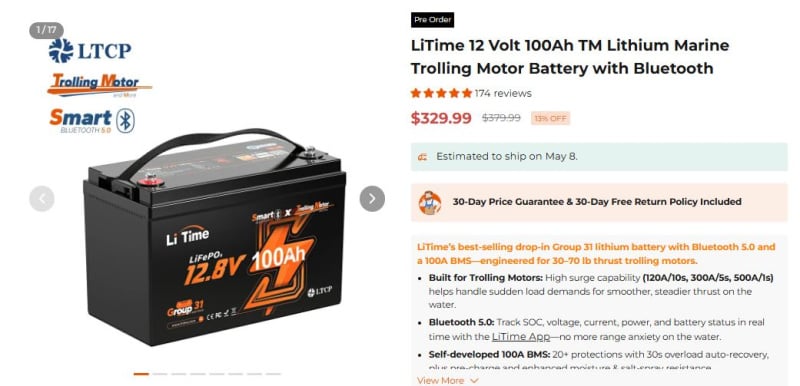
Option 1/2 - Existing refrigerator with solar and battery. Utilizing your current refrigerator would require solar panel and controller ($164.99), solar cable ($35) and battery ($330) and battery cable ($12.99). That would cost in the range of $543 (ouch).
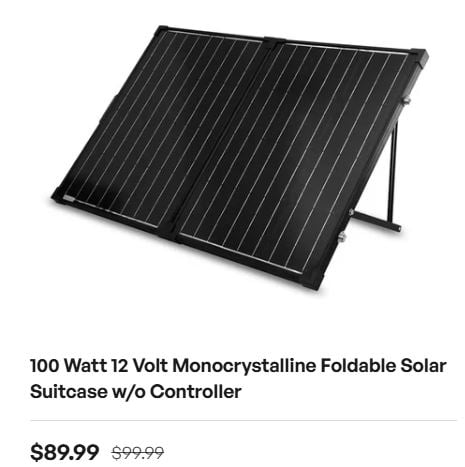
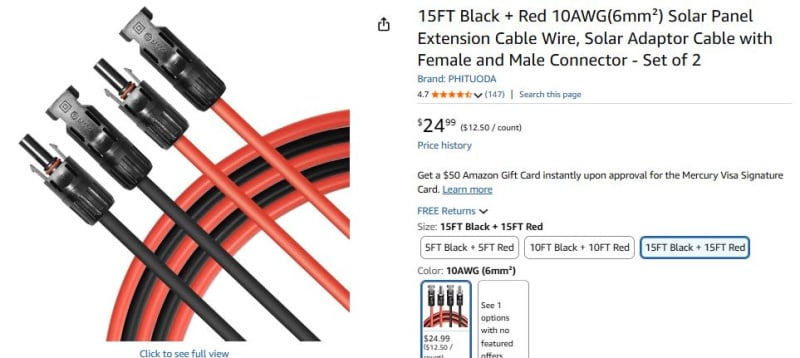
Option 3 - New refrigerator installed in the T@G and external solar. Currently the limited time BougeRV refrigerator deal is $199.99. You would need to install some sort of refrigerator slide system. My estimate of the cost would fall in the range of $100-$170. Your current solar panel would be just sufficient, but I believe it should be augmented. I find it best to see the trailer parked in the shade and use a solar suitcase or two with solar extension cables to get those panels directed into the sun. Currently Renogy has a 100-watt solar suitcase with a 20A PWM controller for $164.99. Solar extension cable would run $25-$43 (15'-40') depending on length. I would suggest 20+ feet. My estimate for a new refrigeration installed in your T@G along with solar would cost around $555 (ouch again).
You may be able to save a little on the solar panel, solar controller, refrigerator slide and battery.
I would look for deals and purchase direct from the manufacturer whenever possible.
My choice would be for option 3. It provides what you need and preserves your current refrigerator as an extra. Option 1/2 gains you a new battery but cost you space in your Subaru.
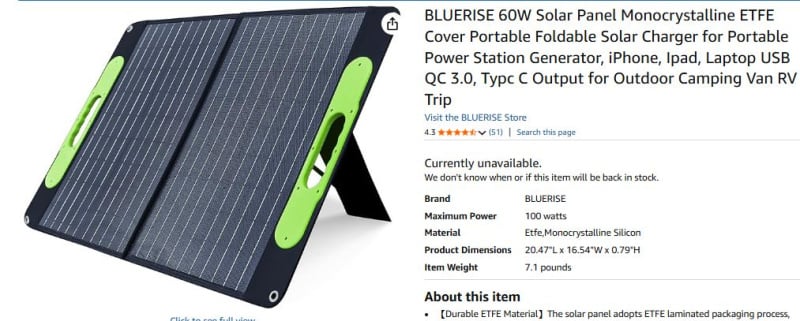
My recommendation would be to stay away from folding laminated ETFE solar panels. My testing has shown the performance is not up to par with the more ridged panels. Some newer panels utilize fiberglass to maintain stability and lightness, but these come with a higher cost.
░ I am not affiliated with any brands and other brands may be found with different specifications and prices.
»» Best of luck with your decision.
I hope whichever option may be utilized, that it enhances your camping experience.
________________________________________

-
Wow, what a great and comprehensive reply, thank you so much. I had figured out the victron upgrade and like the idea of sufficient battery and pv capacity built in for longer stays offgrid. Still looking at lithium batteries with some suspicion after living 20 years with lead acid deep cycle. I would still like a built-in fridge and use bins in the car for storage. One big mystery is how to wire in a second rooftop pv panel and that might dictate a portable/floating pv panel.Again thanks for this,Simon
-
@offgrid2
I just realized that your 2021 T@G Boondock may have a deep cycle battery as opposed to a lithium battery. Changing from lead acid to lithium was my #1 best mod by far. Don't be suspicious about lithium for RV purposes. It is by far very much superior to lead acid, AGM or other variations of lead acid. Make the change as soon as your battery in your T@G fails. You are at 4+ years now. AGM and deep cycle typically last between 3 to 8 years.
I replaced my original 2018 T@G battery was replaced in 2020. I then replaced that battery with lithium in 2021. I still have the old lead acid T@G battery that I maintain in my shed for whatever light loads may come up.
While the cost of lithium was high at the time, I have no regrets. I have never run less than 20% SOC on my camping trips, including a solo 12-day test that lasted 10, because of solar panel shade. Remember I suggested 20+ feet of solar extension cables. I now carry 35-50 feet of solar extension cables. I usually want my trailer and tow vehicle (RAV4) parked in as much shade as possible, because I do a lot of desert camping. (105 degrees plus)
As for how to wire a second rooftop solar panel, that should be easy. If your 2021 T@G does not have an external SAE (Zamp) plug on the site of the tongue box, it would be very easy to install. Mine is a direct connect straight to the battery. From that point, I can connect any solar panel with a solar controller directly to it. I also use mine to charge my T@G battery up to 100% with an external lithium battery charger. It is easy. Using the SAE connector, you would not have the need to upgrade your Victron solar controller. Just use that in combination with your existing solar panel on your T@G. The battery could care less if it is being recharged by one or multiple solar controllers.
A movable solar panel is the way to go while boondocking. It allows you to reposition the panel(s) to face the sun throughout the day. If you are in a wooded area, it is a must, in my opinion. while a single rigid panel is fine, it may not fit behind your front seats easily during transport. That is why I have two solar suitcase style solar panels. Solar suitcase panels transport easy, maintain very well in the elements, wind, rain, etc. I normally transport what I have behind the passenger seat, which still allows my wife comfort while driving and provides easy access to the panels when needed. Note, if you have lithium, you do not even need panels for a 3/4-night camping stay.
I am so pleased with lithium batteries, that I now have three 100Ah 12-volt batteries. One is installed in a solar power station that I designed and built. ( https://teardrop-trailers.vanillacommunity.com/discussion/1812/adding-second-battery-dyi-building-power-station#latest:~:text=Adding Second Battery _ DYI Building Power Station ) The third is free standing and ready to be used for whatever need comes up. I live in southern California, where we have Public Safety Power Shutoffs, typically associated with wind events.
My battery power can easily power a smaller garage refrigerator, my tankless hot water heater, lighting, router, charge phones and T@G refrigerator.
» If you want information on cheap yet inexpensive lithium batteries, I suggest looking at YouTube videos that Will Prowse put out on a regular basis. (DIY Solar Power with Will Prowse - YouTube)
If you can hit a sale, you may be able to get a very good lithium battery for < $250.
My first lithium Renogy battery cost me almost $899. My second lithium battery (LiTime Trolling 100Ah) cost me $239 in November 2023. My third lithium Battery (LiTime Smart Trolling 100Ah) cost me $203 in October 2024.
All purchases were directly from the manufacture. In my experience, the manufacturer will match prices found on Amazon. Buying from the manufacture will give you a much better standing for any warranty claims and typically provided fresher products with the latest hardware/software.
As far as utilizing your current Engel 45 refrigerator in your car, you could easily still use a solar suitcase with a controller and charge up your car battery during the day. I would think that a good/strong car battery would maintain temperature of your Engle 45 during the night. Be aware that this does put your car battery at risk. Try it at home first to see if you run into any issues.
Best of luck in your decisions.
-
Profit margin. They don't sell the camper for any less with an icebox vs a fridge, do they?JamesDow said:Why NuCamp changed from a DC refrigerator to a Yeti icebox is hard for me to comprehend.Dave in Michigan
'21 T@G XL
"If you don't know where you're going, any road will take you there." ~ The Cheshire Cat (Alice in Wonderland) -
So here's what I did:
I bought a refrigerator five years ago which look EXACTLY like the Bouge RV 30 quart, but under a different name. The previous owners had installed a slide drawer, which worked fine with a little tweaking to keep the fridge from moving around while driving. I use a load strap to keep it secure. Note that the plug is on the short end and doesn't impact the side of the refrigerator compartment.
I bought a two Jackery 300w power stations and 100w solar panel, solely to power my fridge. Black Friday is an excellent time, but watch for seasonal sales. I'd consider a higher wattage if buying today (500w/600w). The second power station allows me to switch them for days of consistent rain/clouds. I charge the second one via the inverter in my truck while driving.
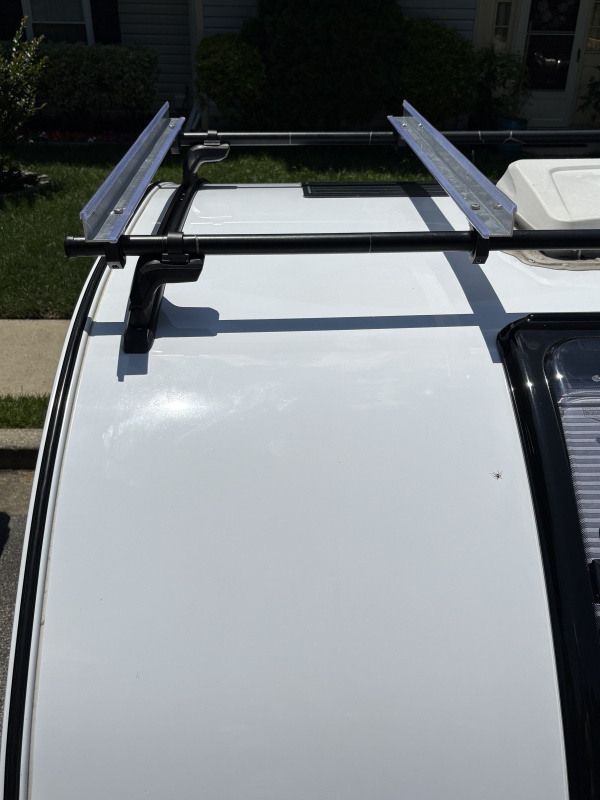
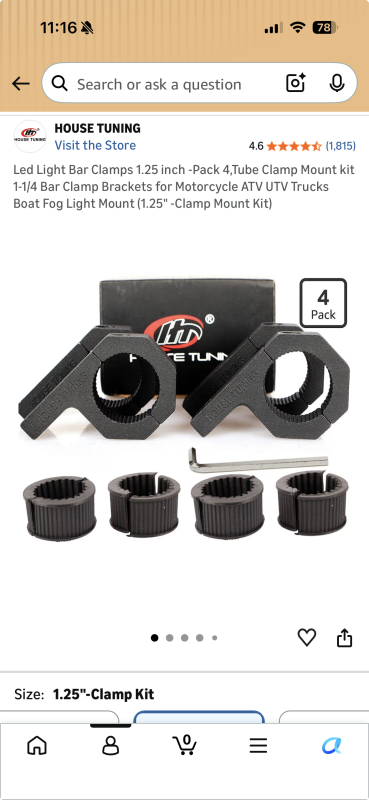
I attached two pieces of aluminum angle to the right/passenger's side my roof rack using light bar clamps, allowing me to place the solar panel flat on top of my trailer. I drilled holes in the angle pieces so that I can use paracord or bungee cords to keep the panel from flying off in high winds. When driving, the solar panel is folded and stored in my vehicle (of course, I don't drive with this panel on the roof!) and the refrigerator is plugged into the trailer. The power station is also stored in my truck to keep it from being damaged. The rack setup is aerodynamic, light, and sturdy.
When camped, I place the power station on my kitchen counter, plug the refrigerator 12v into it, and run the cord up to the solar panel. This works great if I have direct sunlight. If needed, I can take the solar panel down, set it on the ground, and position it to catch the sun.
This has worked great for me. Powering the refrigerator doesn't deplete the AGM battery on the trailer, which I use to run the lights, charge small electronics and run the fan.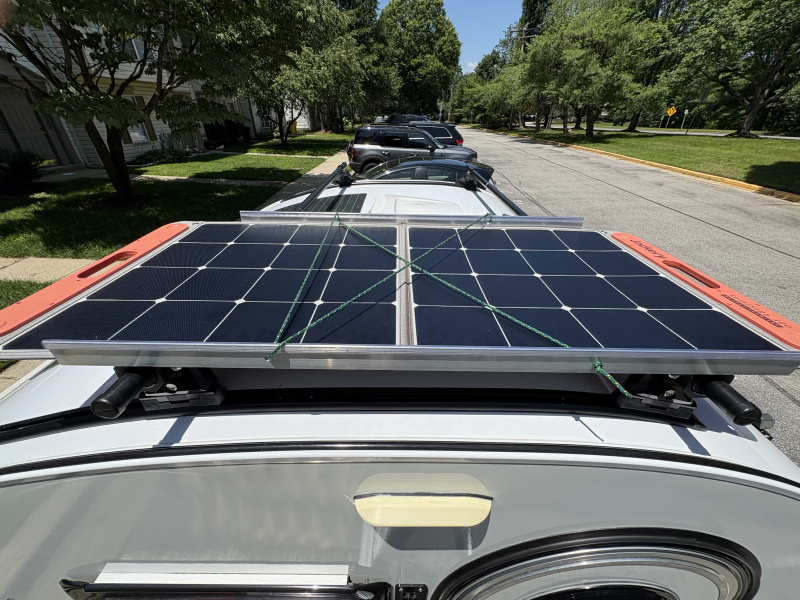
"Improvement makes strait roads, but the crooked roads without Improvement, are roads of Genius."
- William Blake
2021 T@g XL Boondock


Categories
- All Categories
- 3 Forum Rules
- 2 nüCamp & Forum Contacts
- 2 uCamp Rally - News & information
- 65 Air Conditioning & Refrigeration
- 298 Battery/Electrical & Solar
- 198 Camping & Travel
- 21 Events & News
- 1 "FOR SALE" - New & Used Trailers
- 4 "FOR SALE" - Camping & Trailer Gear
- 104 Heating/Plumbing & Winterizing
- 38 Help - Computer & System
- 135 Introductions
- 36 Looking to buy a Trailer?
- 380 Modifications & Upgrades
- 63 Newbie 101 Tips
- 126 Products & Accessories
- 24 Service/Maintenance & Recall Notices
- 3 Solo Travelers Hints & Tips
- 2 T@B Forum
- 5 Testimonials
- 30 T@G & Factory Comments
- 2 Teardrop Groups & Helpful Links
- 75 Tips & Tricks
- 131 Trailers & Towing
- 10 User Manual/PDF Files/Videos & Resources